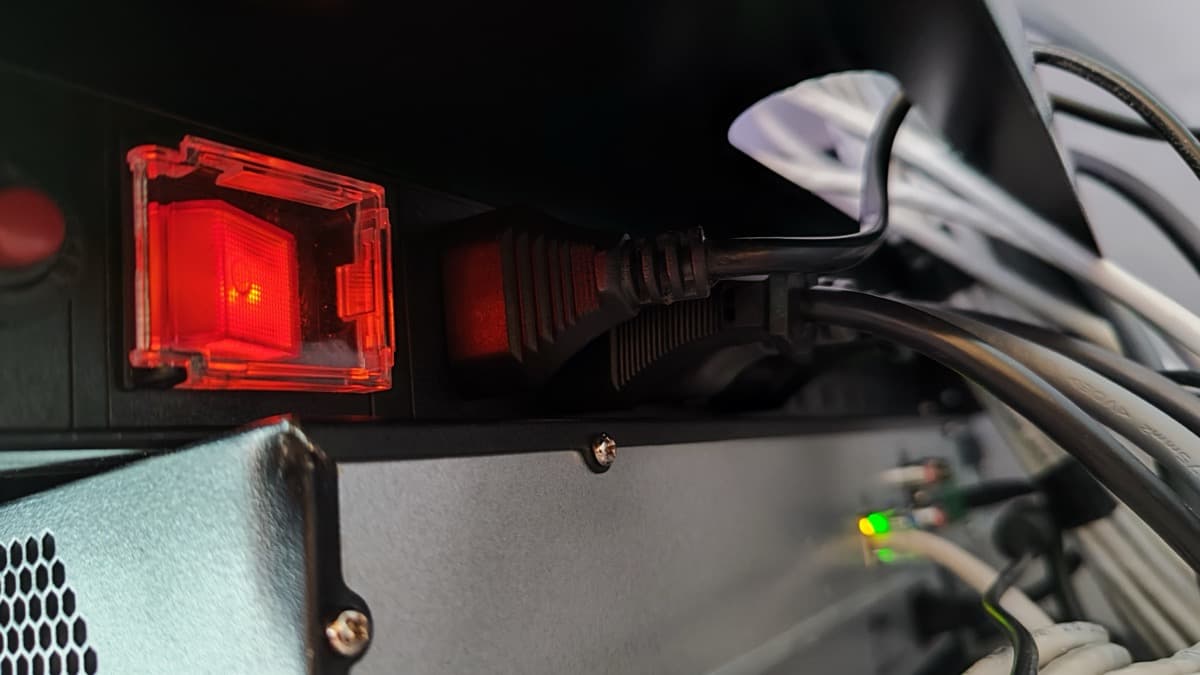
Business Power Protection: More Than Just a UPS
In Argentina and Chile, power outages are frequent — especially during summer and in areas far from urban centers. A mere 2-hour outage can mean data loss, equipment damaged by surges when power returns, and operations completely halted.
UPS: the first line of defense
Not all UPS systems are equal. There are three main technologies:
- Online (double conversion): power always passes through the inverter. Zero transfer time. Mandatory for servers and critical network equipment.
- Line-interactive: good cost/protection balance for workstations and mid-tier equipment.
- Offline (standby): the most basic. Only for non-critical equipment.
Golden rule: always size with a minimum 30% headroom above the current load. This allows for future growth and prevents the UPS from operating at its limit (which reduces its lifespan).
Intelligent PDUs
Intelligent Power Distribution Units are essential in any professional server rack. They enable:
- Per-outlet power consumption monitoring
- Automatic overload alerts before a problem occurs
- Remote power on/off for specific equipment
- Historical consumption logging for capacity planning
Generators and automatic transfer
For operations that cannot stop — hotels, clinics, data centers, mining operations — a generator with ATS (Automatic Transfer Switch) is indispensable. When grid power is lost, the ATS detects the drop and starts the generator automatically within seconds.
The UPS covers those transition seconds, ensuring equipment never loses power. It's the UPS + generator + ATS combination that achieves real continuity.
Surge protection
Surge protectors must be installed at every electrical and data entry point. Lightning can enter not only through the power line — but also through the internet connection, phone line, or CCTV cabling, destroying switches, routers, and servers in milliseconds.
Protection should be cascaded: main suppressor at the general electrical panel, secondary suppressors at each rack and PDU, and individual suppressors on critical equipment.
Monitoring and alerts
Systems like Grafana allow real-time monitoring of each UPS status, current load, battery temperature, and remaining autonomy. At DITAP, we integrate everything into a centralized dashboard with automatic alerts via email and Telegram.
This enables anticipating problems: a battery losing capacity, a UPS approaching its load limit, or ambient temperature out of range. Prevention is always cheaper than repair.